
Solar Powered CCTV for Sites Without Mains Power
Remote sites, construction projects and rural properties often lack mains electricity. Solar-powered CCTV provides reliable surveillance without the need for cabling or grid connection.
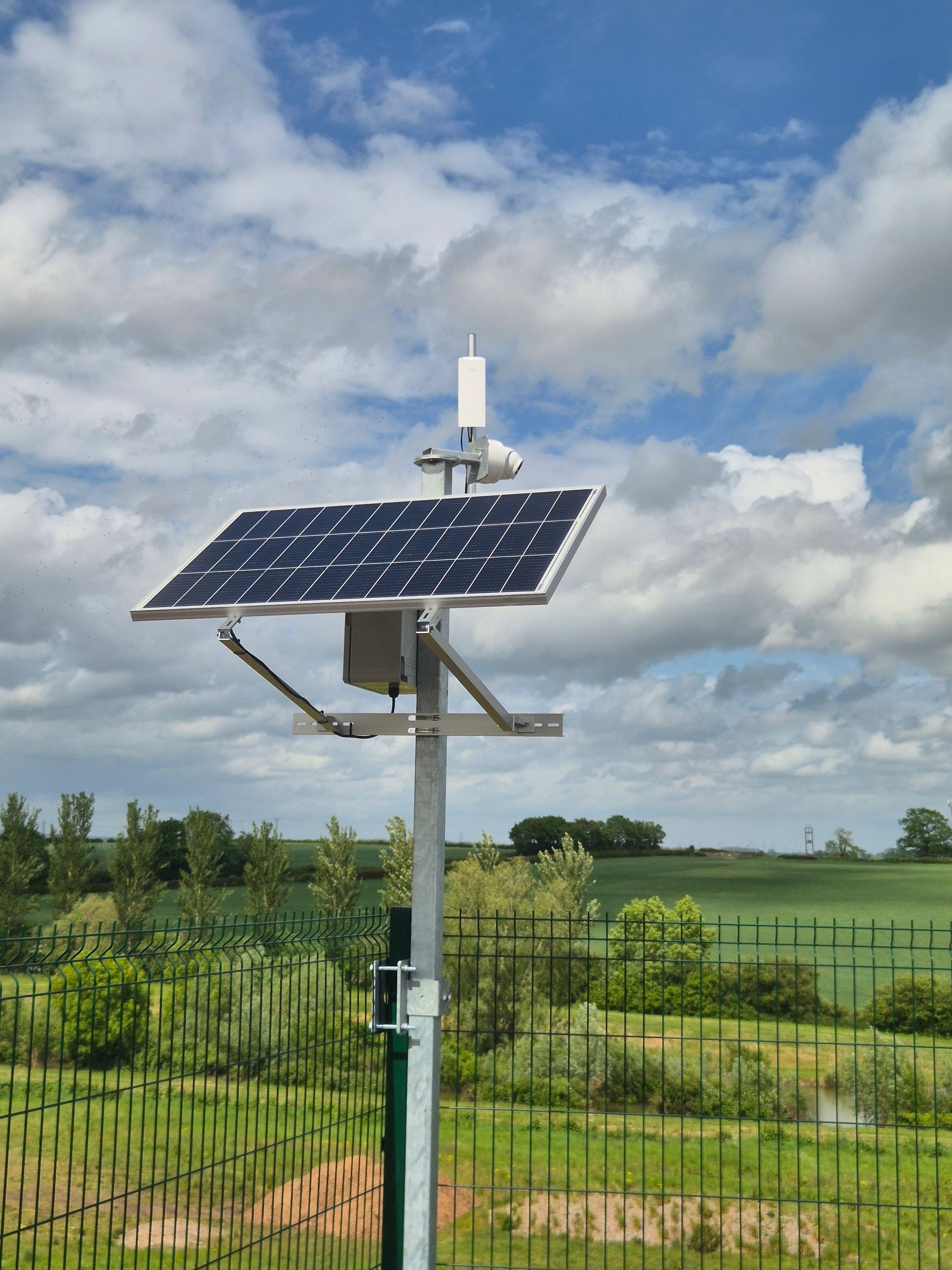
Solar Powered CCTV for Sites Without Mains Power
For many sites across the UK, running mains power to a CCTV camera simply isn't practical. Remote agricultural land, construction sites in early stages, vacant properties, and rural compounds all present the same challenge: how do you maintain effective surveillance without a grid connection?
Solar-powered CCTV is the answer for a growing number of property owners and site managers.
How Solar CCTV Works
A solar CCTV system combines:
- Solar panels — Generate electricity from sunlight during the day
- Battery storage — Store energy for use at night and during cloudy periods
- CCTV cameras — High-definition cameras with night vision capability
- Mobile connectivity — 4G/5G connection for remote viewing and alerts
- Secure mounting — Robust poles or structures designed for outdoor use
The system is entirely self-contained. Once installed, it operates independently of the grid, providing continuous surveillance without ongoing power costs.
Where Solar CCTV Is Most Effective
Solar-powered CCTV is particularly well-suited to:
- Construction sites — Protect plant, materials and equipment from the earliest stages of a project
- Agricultural land — Monitor gates, outbuildings, livestock areas and field boundaries
- Remote compounds — Secure storage yards, plant depots and utility infrastructure
- Vacant properties — Maintain surveillance during periods of non-occupation
- Temporary events — Provide security for outdoor events without permanent infrastructure
Designing a Reliable System
The reliability of a solar CCTV system depends on careful design. Key factors include:
Panel sizing — The solar panel must generate sufficient power for the cameras, battery charging and communications equipment. Undersized panels lead to system failures during extended cloudy periods.
Battery capacity — The battery must store enough energy to power the system through the night and during periods of poor weather. UK winters, with short days and frequent cloud cover, are the real test of a system's design.
Camera configuration — Continuous recording uses more power than motion-triggered recording. The right balance depends on the site's risk level and the required footage retention.
Mobile connectivity — Most solar CCTV systems use a 4G or 5G connection for remote access. Signal strength should be assessed before installation, as coverage can vary significantly across rural areas.
Remote Viewing and Alerts
One of the key advantages of modern solar CCTV is the ability to monitor your site from anywhere. Via a smartphone app or web browser, you can:
- View live footage from any camera
- Review recorded footage
- Receive motion-triggered alerts
- Check system health and battery status
This is particularly valuable for sites that are regularly unattended, allowing you to respond quickly to suspicious activity without being on-site.
Maintenance Considerations
Solar CCTV systems require periodic maintenance to ensure continued reliability:
- Panel cleaning — Dust, bird droppings and debris reduce panel efficiency
- Battery health checks — Battery capacity degrades over time and should be monitored
- Camera checks — Ensure cameras haven't been obscured by vegetation or site changes
- Firmware updates — Keep camera and system software up to date
Get a Free Site Assessment
Midland Security Services designs and installs solar CCTV systems across the Midlands and beyond. We'll assess your site, recommend the right specification, and provide a clear quotation.
Contact us today to arrange your free solar CCTV assessment.
Explore Topics
Written by
Midland Security Services
Content creator and writer sharing insights and stories.
